
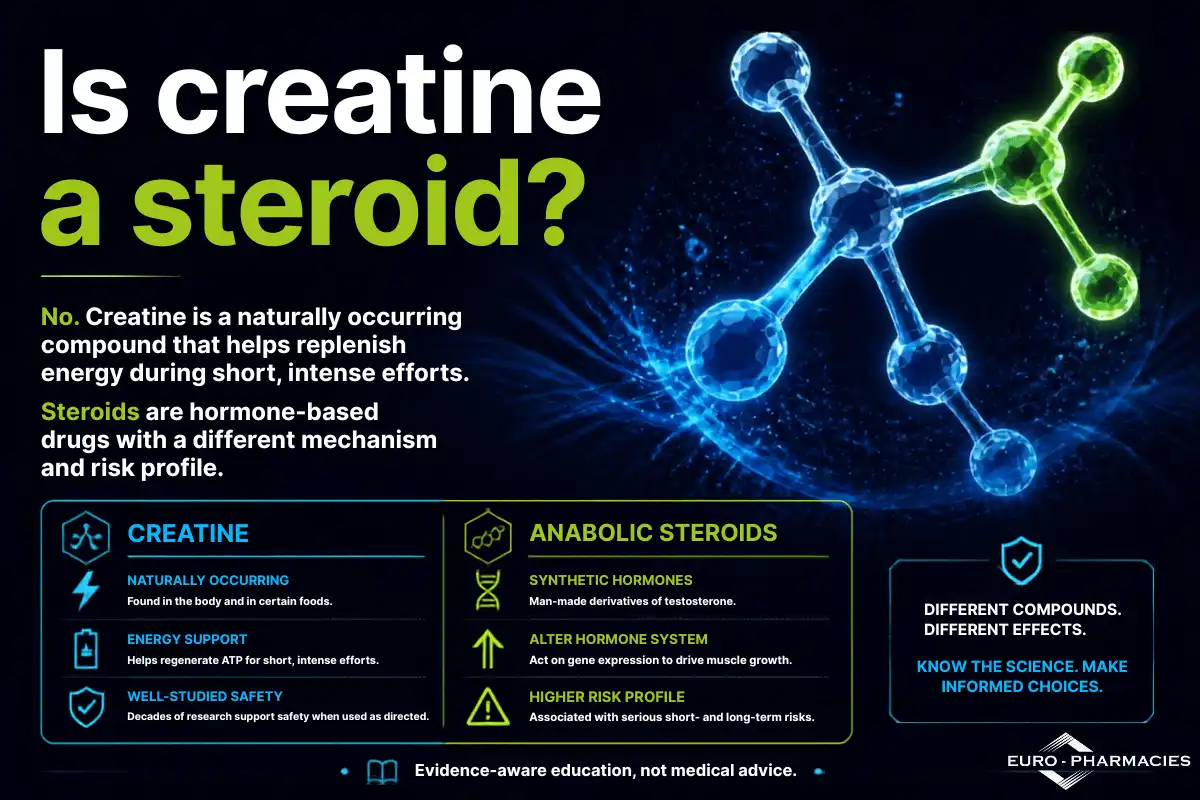
Creatine is one of the most popular dietary supplements among athletes and fitness enthusiasts, often lauded for its ability to enhance performance, increase muscle mass, and aid in recovery. However, it frequently finds itself at the center of a heated debate: is creatine a steroid? This question arises from a misunderstanding of the differences between creatine and anabolic steroids, as well as the role each plays in athletic performance and muscle development. In this article, we will explore the nature of creatine, compare it with steroids, and clarify misconceptions to provide a comprehensive understanding of these substances and their implications for health and fitness.
Understanding Creatine: What It Is and How It Works
What is Creatine?
Creatine is a naturally occurring compound found in small amounts in certain foods (like red meat and fish) and synthesized by the body from amino acids. Think of it as your body’s energy shot—specifically, it helps produce ATP (adenosine triphosphate), the energy currency of cells. When you’re sprinting or lifting weights, creatine kicks in to fuel those hard-working muscles.
How Creatine is Used in the Body
Once consumed, creatine travels to your muscles, where it gets stored as phosphocreatine. When you engage in high-intensity activities, phosphocreatine hands over its phosphate group to ADP (adenosine diphosphate) to form ATP. This quick energy release can boost your performance and delay fatigue, making it a popular choice among athletes and gym-goers alike.
Different Forms of Creatine Supplements
Creatine isn’t a one-size-fits-all situation. You’ll find it in various forms, such as creatine monohydrate (the OG and most researched), creatine ethyl ester, buffered creatine, and more. Each type claims to have its own set of pros and cons, but monohydrate remains the trusty workhorse for most people looking to enhance their workout gains.
The Science Behind Steroids: Definition and Types
What Are Steroids?
Steroids are a class of synthetic substances that mimic testosterone and other hormones in the body. They’re not just one thing; they serve various purposes, from building muscle to treating specific medical conditions. Some are legal and beneficial in a medical setting, while others might get you in hot water if you misuse them for performance enhancement.
Anabolic Steroids vs. Corticosteroids
Not all steroids are created equal! Anabolic steroids are the ones that get all the attention (both good and bad) because they promote muscle growth and strength. On the flip side, corticosteroids are usually prescribed for issues like inflammation and autoimmune diseases. Think of anabolic steroids as the gym rats, while corticosteroids are the couch potatoes healing a backache.
Common Types of Anabolic Steroids
Some of the most notorious anabolic steroids include testosterone, nandrolone, and stanozolol. These bad boys are often associated with bodybuilders and athletes looking to gain a competitive edge—usually with a side of controversy. Legal implications, health risks, and ethical dilemmas surround their use, making them a hot topic in sports and medicine.
Comparing Creatine and Steroids: Key Differences
Mechanism of Action
Creatine primarily enhances performance by increasing the availability of energy in muscle cells, leading to improved strength and endurance during short bursts of activity. Steroids, especially anabolic ones, work by mimicking hormones that promote muscle protein synthesis, which can lead to significant muscle growth over time. In short, creatine offers a boost, while steroids build.
Legal Status and Regulation
Creatine is legally available over the counter and commonly accepted in sports, while anabolic steroids are often banned by most sports organizations and are illegal to use without a prescription. So, if you’re aiming for that trophy, you’ll want to stick to creatine unless you want an impromptu chat with the anti-doping squad.
Usage in Sports and Fitness
Creatine enjoys a sterling reputation in the fitness community for its safety and effectiveness. It’s widely used by everyone from casual gym-goers to elite athletes. Steroids, on the other hand, are a mixed bag—they might offer quick gains, but they come with a laundry list of potential side effects and ethical issues that could leave you on the sidelines.
Benefits of Creatine Supplementation
Enhancing Athletic Performance
One of the most celebrated benefits of creatine is its ability to improve high-intensity exercise performance. Whether you’re looking to up your sprinting game or lift heavier weights, creatine can give you that extra oomph to push through.
Muscle Growth and Recovery
Creatine not only helps with immediate performance but also supports muscle growth by increasing cell hydration and possibly decreasing muscle breakdown. Plus, it can help with recovery after your workouts, meaning you won’t be hobbling around like a newborn giraffe the next day.
Potential Cognitive Benefits
Surprise! Creatine isn’t just for your biceps. Some studies suggest it may positively impact cognitive function, particularly during mentally demanding tasks. So, while you’re pumping iron, you might just boost your brain power too. Who knew getting swole could make you smarter?
Potential Side Effects and Risks of Creatine
Common Side Effects
While creatine is generally regarded as safe, it can come with a few uninvited guests in the form of side effects. Common complaints include stomach cramps, nausea, diarrhea, and muscle cramping. Some users even report weight gain due to water retention, which can feel a tad unfair when you just want those gains without the extra “flotation device.” But fear not! Most of these side effects can often be mitigated by staying hydrated and taking creatine with food.
Long-Term Health Concerns
When it comes to long-term use, the research is still swimming in murky waters. Most studies suggest that creatine is safe for extended periods (think years, not months), but the long-term effects on kidney function and liver health remain a topic of research. So, if you’re planning on making creatine your lifelong buddy, it’s a good idea to check in with a healthcare professional every now and then. They won’t judge you for your gym selfies, promise!
Who Should Avoid Creatine?
Not everyone should jump on the creatine bandwagon. If you have pre-existing kidney issues or are pregnant or breastfeeding, it’s best to steer clear. Additionally, those who are under 18 should consult a doctor before hopping on the creatine train—better safe than sorry! And if you’re the type who reacts negatively to supplements in general, well, it might be wise to skip this one. You do you!
Misconceptions Surrounding Creatine and Steroids
Creatine as a Gateway to Steroid Use
Ah, the classic slippery slope argument! Some folks fear that using creatine is akin to signing up for steroid use, but that’s like saying eating pasta will lead you to a life of gourmet chef stardom. Creatine and steroids are chalk and cheese; while creatine helps with energy production, steroids are hormones that alter bodily processes. So, if you’ve been led to believe you’re just one scoop away from juicing, think again!
Public Perception and Misinformation
The perception of creatine is marred by misinformation, often fueled by those who mix up the fitness world with the natural food aisle. Some believe it’s a shortcut to muscle gains and automatically assume all ‘supplements’ are suspicious. This stigma makes it tough for people to understand that creatine isn’t some magic potion but rather a well-researched ergogenic aid. It’s time to separate fact from fiction and maybe even throw in a little reading for good measure!
Scientific Evidence vs. Myths
Science has your back! Numerous studies have shown that creatine is effective for improving strength and performance, dispelling many myths that it’s harmful or gives you “roid rage.” Researchers aren’t just flexing their muscles here; they’ve dedicated time to studying its benefits and any potential drawbacks. If you’re curious, dive into some peer-reviewed articles and get the scoop straight from the source. Spoiler alert: It’s not all doom and gloom!
Regulatory Perspectives on Creatine and Steroids
Sports Organizations and Banned Substances
In the world of sports, the line between what’s acceptable and what’s a no-go can get a bit blurry. However, creatine is generally not on the banned substances list of major sports organizations like the NCAA or the IOC. They don’t see it as a performance enhancer in the same league as anabolic steroids, which is a small win for creatine enthusiasts everywhere. So, you can flex your creatine gains without the fear of a sports scandal on your hands.
Legal Status of Creatine in Different Countries
Creatine enjoys a pretty good reputation globally and is legally available in most countries, unlike steroids, which often require prescriptions or are outright banned. Of course, laws can vary, so it’s always a good idea to double-check local regulations before stocking up on your creatine stash. Remember, ignorance of the law is no excuse, especially if you don’t want a visit from the supplement police!
Impact of Regulation on Usage
Regulations (or lack thereof) can shape how people perceive and use supplements like creatine. Because it’s not banned, it’s widely accepted within competitive sports, leading to greater usage and maybe even more demand. On the flip side, the absence of strict regulations can sometimes result in low-quality products flooding the market. So, while you’re racking up those gains, make sure you’re choosing reputable brands—you wouldn’t want to accidentally consume something that’s more “mystery sludge” than “power powder.”
Conclusion: Is Creatine a Steroid?
Summary of Key Points
So, to recap: creatine is not a steroid. It’s a well-researched supplement that helps improve strength and performance without the hormonal effects of steroids. While it does come with some potential side effects and misconceptions, the science largely supports its safety and efficacy when used correctly.
Final Thoughts on Creatine and Steroid Use
In conclusion, if you’re looking to boost your workout without diving into the dark world of steroids, creatine might just be your new best friend. As with any supplement, moderation is key, and it’s always advisable to consult a healthcare provider to determine what’s right for you. So, lift responsibly, stay informed, and remember—those gains won’t come without a little hard work!
In conclusion, while creatine and steroids are often discussed in the same context, they are fundamentally different substances with distinct effects on the body.
Creatine is a naturally occurring compound that enhances athletic performance and muscle growth, whereas steroids are synthetic hormones that can have significant side effects and legal implications. Understanding these differences can help individuals make informed choices about their supplementation and training regimens, ensuring safer and more effective approaches to achieving their fitness goals.
FAQs
1. Can I take creatine and steroids at the same time?
While it is technically possible to take both supplements, it is important to consider the potential health risks and legal implications of steroid use. Always consult with a healthcare professional before combining any supplements.
2. Is creatine safe for long-term use?
Research suggests that creatine is safe for most individuals when used as directed. However, it is advisable to consult a healthcare provider, especially for those with pre-existing health conditions.
3. Will creatine cause weight gain?
Creatine can lead to temporary weight gain due to increased water retention in the muscles and muscle growth. This is typically not fat gain, but rather an increase in lean body mass.
4. How does creatine impact athletic performance?
Creatine has been shown to improve strength, increase muscle mass, and enhance recovery, making it beneficial for high-intensity training and explosive activities.
TEAM EP